
Lockport Previous Resident Sources
No one collection spans the full life of a Lockport address. Start with the source closest to the period, then use a second source that records a different relationship. Deeds follow interests in land. Directories follow selected names or phone subscribers. Sanborn maps follow buildings and blocks. Each can support a house history without proving every person who slept there.
| Source | Years it covers | Where held | What it may show |
|---|---|---|---|
| Recorded land instruments | 1836 to present; images generally 1965 forward online | Will County Recorder | Parties, document date, PIN, legal description, linked plat |
| Named Lockport city directories | 1859/60, 1872/73, 1899/1900, plus later runs with gaps | White Oak Library | Edition-specific name, address, occupation, or business clue |
| Lockport telephone directories | 1924 to 1952 with gaps | White Oak Library | Subscriber and telephone address clues |
| Sanborn fire-insurance maps | 1886, 1891, 1897, 1902, 1909, 1926 | University of Illinois | Block, house number, structure, use, and construction |
| Historic deeds and plats | Back to county inception | Recorder archive, microfilm, books, and plat maps | Older title chain and land identity when an address fails |
For a recent transfer, begin online. For an address before the usual online image cutoff, plan for the archive. For a twentieth-century household, compare a named directory edition with a deed or map. A gap is evidence too, and should remain marked as unresolved.
Start Lockport Previous Resident Research
The Recorder's Ways to Search page is the best controlled entry for a backward address trail. It explains free Direct Search, subscription Laredo, pay-as-you-go Tapestry, and the name, PIN, address, book/page, date, and document-type routes.
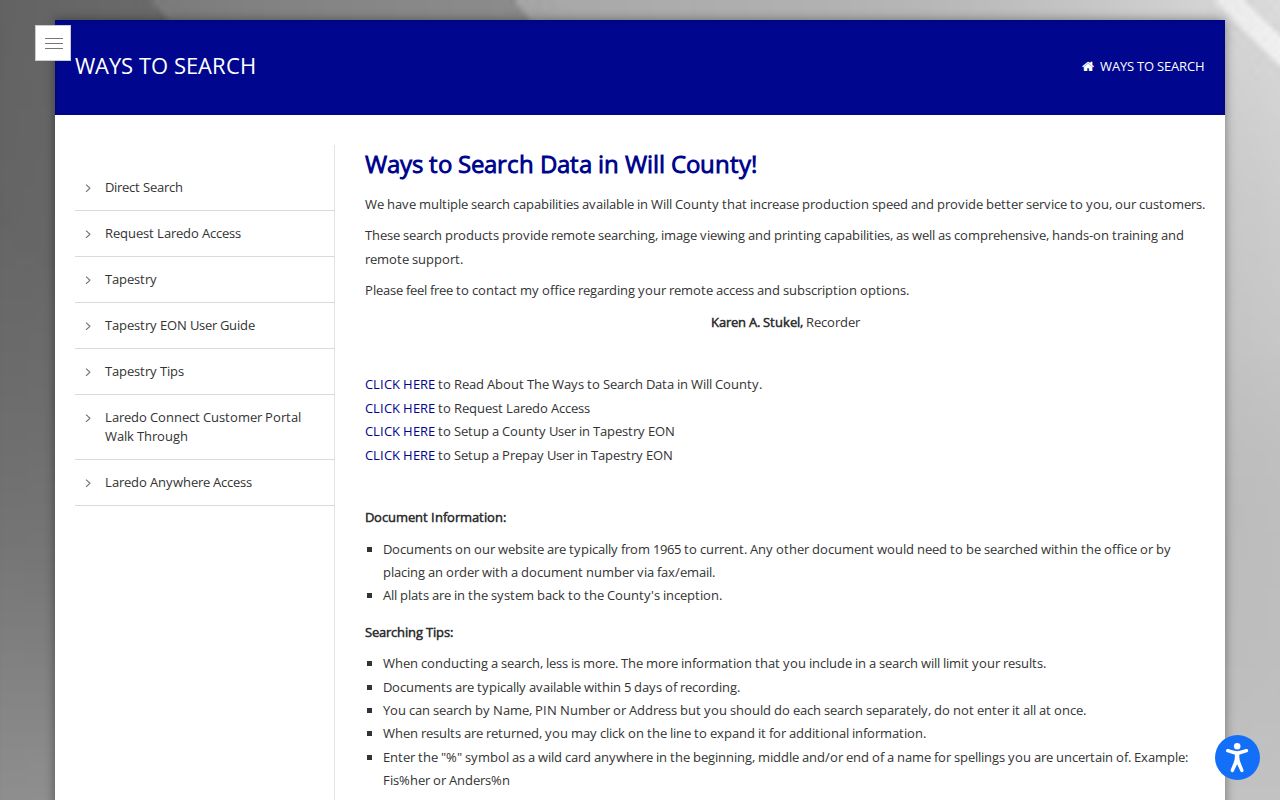
The page shows why an address is only one route. A PIN or document number is often more stable when a street form has changed.
Direct Search accepts grantor and grantee roles separately. Its address route uses street number, street name without the type suffix, and city. Wildcards can help with name variants. Preserve punctuation in an organization or trust name and confirm the index entry in the document image. A title-holding entity, trustee, attorney, or signer is not automatically a past resident.
Trace Lockport Previous Owners
The chain of title is the sequence of recorded transfers affecting the same land. Begin with today's assessment parcel, but do not rely on its street line alone. Save the PIN and legal description, which describes the land in recorded terms. Then move from each buyer's deed to the seller's earlier acquisition.
- Find the current parcel in the Will County assessment search. Record the PIN, site address, and displayed date.
- Search that PIN and current title name in the Recorder index. Open the purchase deed and confirm its legal description.
- Save the grantor, grantee, document number, execution and recording dates, type, book/page, and prior-record references.
- Search the seller as a grantee to find when that party received the same land. Repeat while the legal description still matches.
- When online images stop, use the public archive, historic indexes, microfilm, books, plat books, maps, or a document-number copy request.
- Grantor
- The party conveying an interest in the recorded instrument.
- Grantee
- The party receiving that interest.
- Chain of title
- The linked sequence of instruments for the same land.
- Legal description
- The recorded words defining the land, often more dependable than an old street label.
A parcel split or combination can create a new PIN. Search a shorter Lockport prefix and compare PIN_RECORDER when the final digits no longer connect. This insider step is safer than forcing an old deed onto the current parcel.
Lockport Previous Residents Across Eras
Will County's repository begins in 1836, but online document images are generally available from 1965 forward. The Laredo access page states the same 1965-forward index context. Older Lockport previous residents therefore require a deliberate handoff from a web index to archive resources.
The Laredo access information makes that coverage boundary clear.
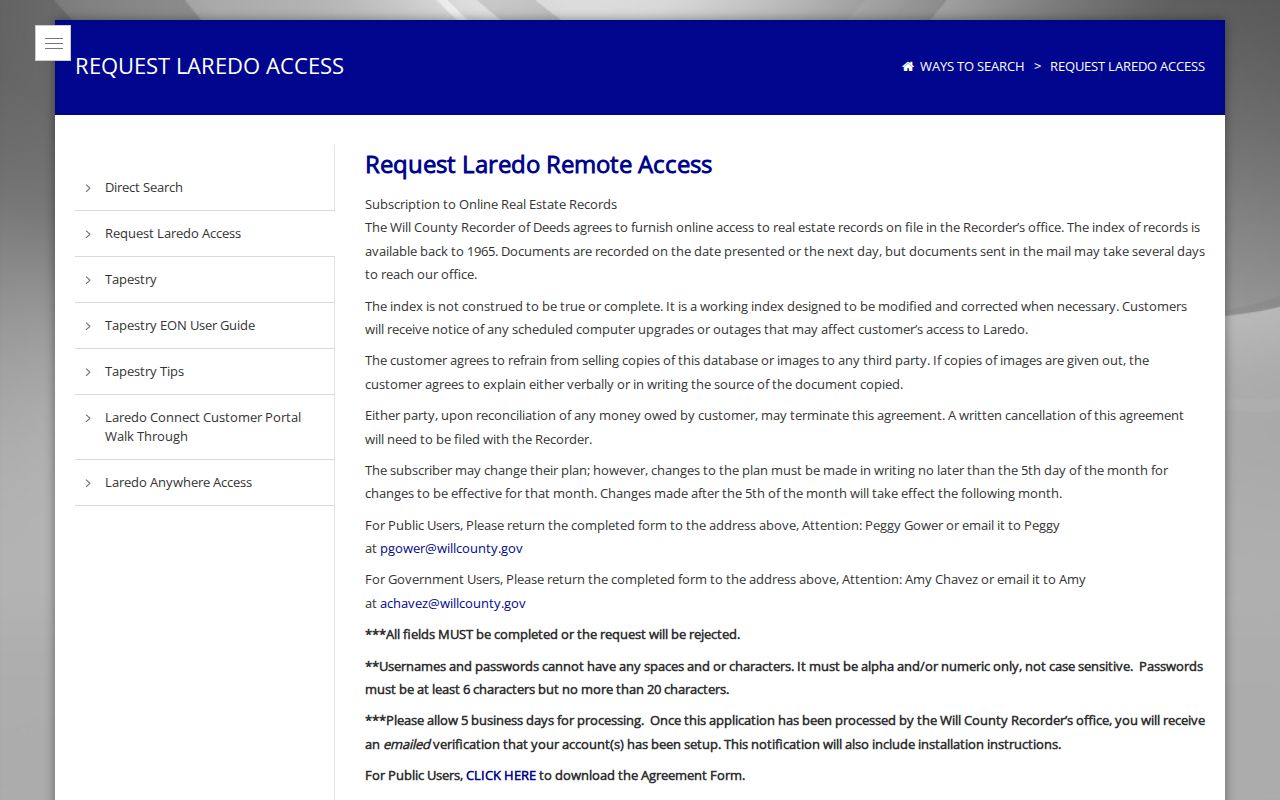
The captured coverage note keeps a recent online search from being mistaken for the county's full historic collection.
Archive staff provide workstations, microfilm viewers, historic indexes, books, plat books, and maps, but they do not complete a complex title search for the requester. Bring names, trust number, recording date, document type, address, PIN, or preferably the exact document number. Ask about copies if the image is needed for a firm citation.
Note: An empty web result before 1965 is a prompt to change access channels, not proof that no deed exists.
Index Lockport Previous Resident Deeds
The county-linked Direct Search index offers a free first pass. It is useful for finding document numbers and narrowing the chain before ordering a copy or visiting Joliet.
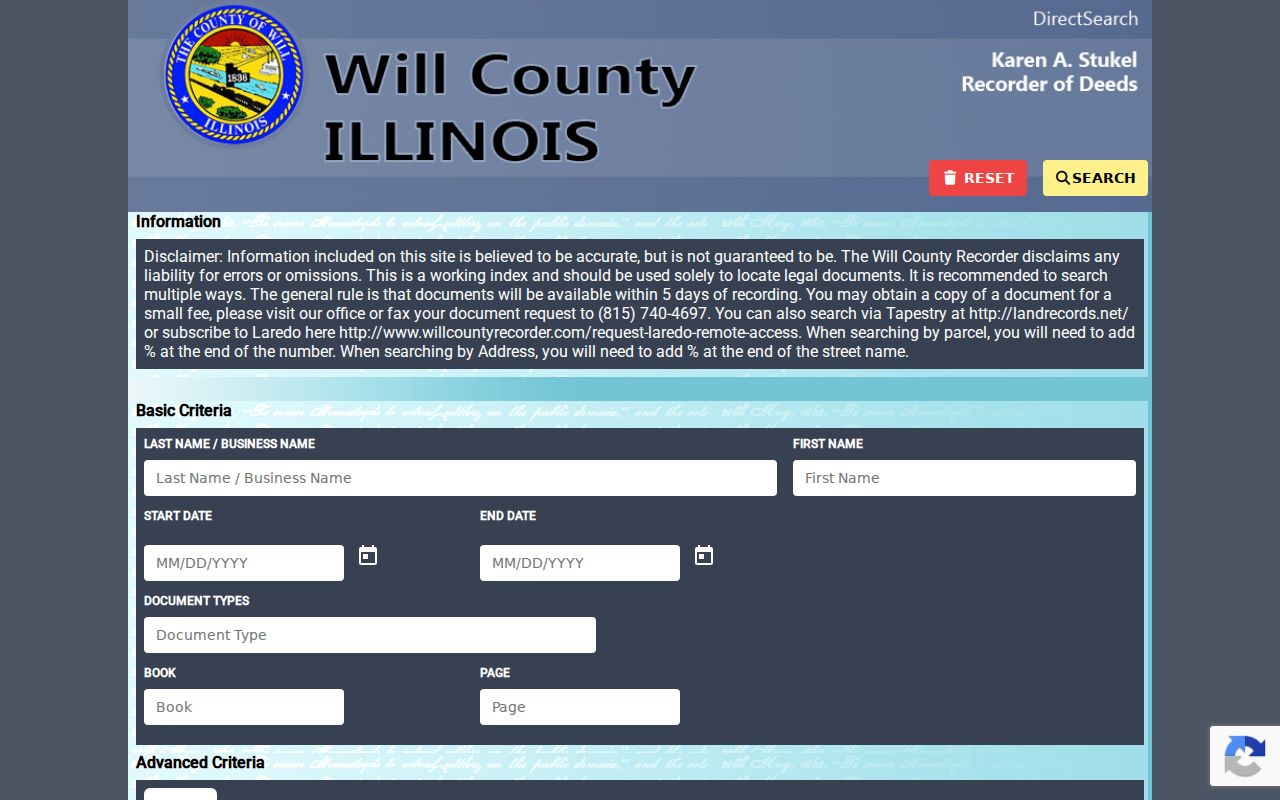
The index is a lead, not the instrument itself. Read the image or obtain the record before stating that a transfer involved the same Lockport parcel.
Record both the execution date and recording date when shown. A later correction, release, mortgage, subdivision, or plat can explain why a name or PIN appears out of order. Preserve all linked-record references. This is especially important where canal-era descriptions or older lot language do not resemble the current address.
Map Lockport Past Resident Addresses
Sanborn maps supply the structure layer that deeds and directories lack. The University of Illinois lists Lockport maps for six editions from 1886 through 1926. The 1886 item has four colored sheets at 50 feet per inch. Sheet 1 contains the key and index; the set shows block and house numbers, factory or commercial use, construction, windows, doors, elevators, and water details.
A Sanborn sheet cannot name every person who occupied a building. Use its block number and structure footprint to test whether an old directory address points to the same site. Then compare the current GIS parcel and recorded plat. Historic house numbers, Sanborn block numbers, current PINs, and USPS labels are separate address layers.
The University of Illinois holdings list supplies the dated Lockport map run. Public-domain download choices are shown on the 1886 item, while the holdings page remains the reliable route for editions whose item page is unavailable.
Pair Lockport Past Resident Directories
Owners are only one part of the address story. White Oak Library's Lockport directories, telephone books, vertical files, and yearbooks can provide edition-specific household clues. A listing may show a name, occupation, business, phone subscriber, or address, but it may omit many people and can be stale.
- Write the exact address form and choose the closest named Lockport edition.
- Ask whether that volume has a street, telephone, business, or reverse section. Do not assume every edition does.
- Capture title, publisher, edition year, page, call number, or image identifier, plus the entry's exact role.
- Compare the name with a deed, newspaper, yearbook, cemetery lead, or census source from the same period.
- Move to the next edition and mark the first appearance, last appearance, spelling change, and any missing year.
White Oak reference staff can connect a surname, street, and edition to the local-history shelves. This is a strong human-use route for previous residents when an online query fails. The collection years and publishers are treated in depth on the Lockport city directories page.
Runyonstown Clues for Past Residents
Lockport history supplies search terms that modern street forms cannot. The city's account places Armstead Runyon near Fiddyment Creek in 1830 and describes the early settlement as Runyonstown. William Gooding and Illinois and Michigan Canal development then shaped the place. Canal, mill, rail, township, village, and industrial terms can unlock a vertical file, newspaper, map sheet, or legal description.
The City of Lockport history page provides that official setting.
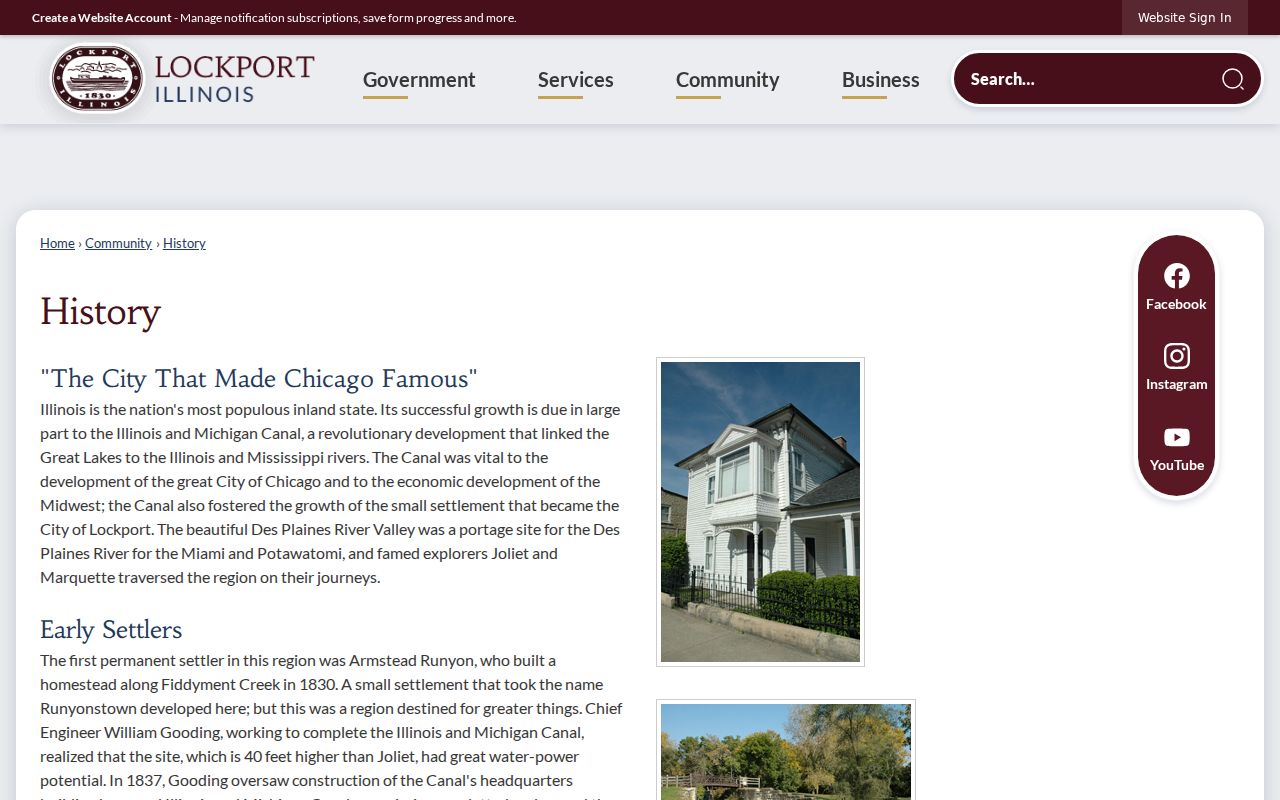
This local history turns an unfamiliar place name into a records lead without inventing a modern street match.
A deed should still control the legal description, and a dated map should control the old geography. Local color is useful only when attached to a source, edition, or document. Keep a Runyonstown reference as a lead until the address chain proves the connection.
Archive Lockport Previous Resident Records
The Recorder archives and copies page describes the path for pre-digital indexes, microfilm, and copy requests.
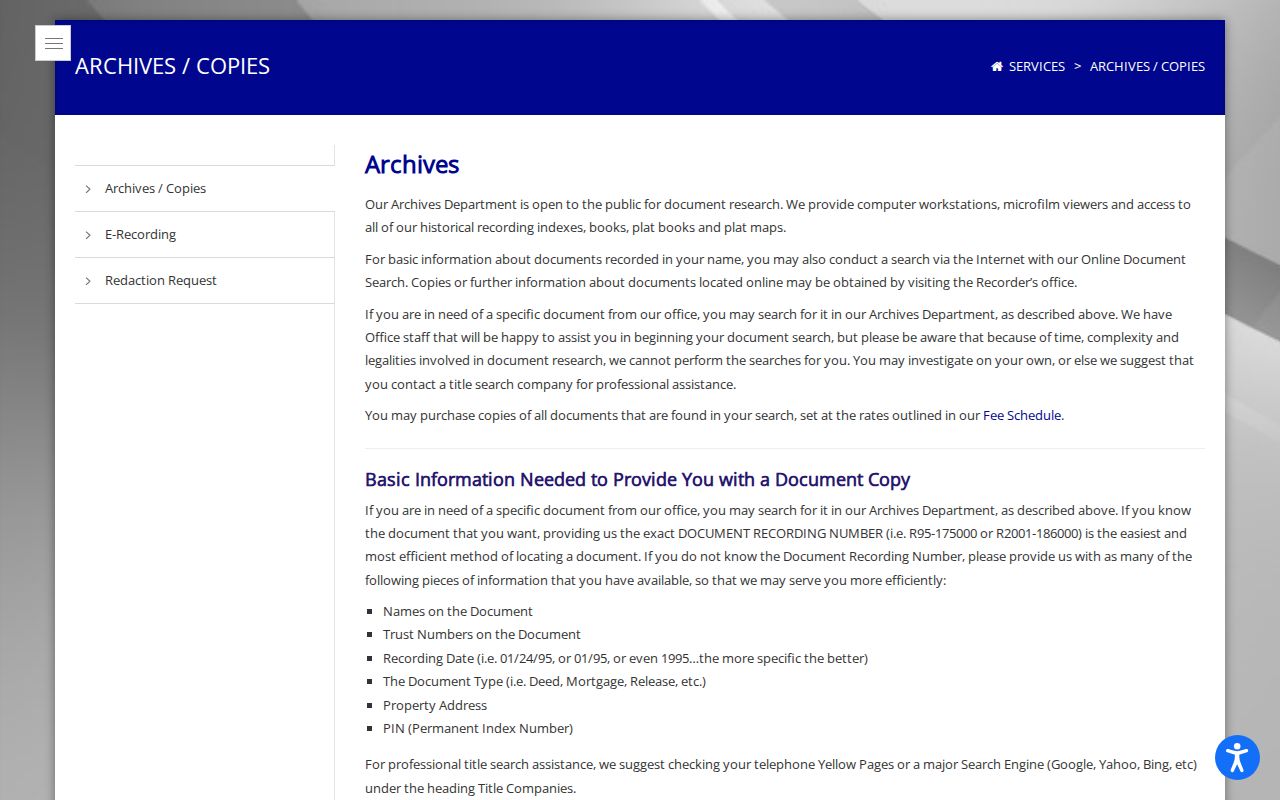
The archive route is part of a complete Lockport previous-resident search, not an optional extra after the web index ends.
White Oak's vertical files add clippings, reports, photographs, ledgers, and fragile material under subjects such as Lockport, people, Will County, and the Illinois and Michigan Canal. Regional repository inventories add census, cemetery, newspaper, township, and directory leads. Confirm a specific item before relying on an inventory because holdings may move.
Cemetery and obituary clues can close a household trail, but they require the same restraint. The Lockport Cemetery Association has a public contact and rules, not a public interment index. Ask with the precise vocabulary supported by the record, and do not infer a burial or family link from an absent web result.
Limits on Lockport Previous Residents
A deed proves a recorded transaction, not residence. A phone directory may show only the subscriber. A city directory may list a business or one household head. A Sanborn map dates a structure, not its occupants. Even two sources that share a name and address can refer to different people unless the dates, middle initials, relatives, and land description align.
Lawful use. Research Lockport previous residents for house history, genealogy, heirs, or personal curiosity. Never use an address trail to stalk, harass, threaten, or track a living person.
Publish the least sensitive evidence needed. Cite the office, record type, URL, document or page number, access date, and any uncertainty. Illinois privacy protections, the Address Confidentiality Program, voter redactions, Recorder redaction procedures, and portal terms still apply when an index is public.